Pages

Showing posts with label active participation. Show all posts

Tuesday, December 30, 2014

Target Learning: I don't know???

What did you learning today?
Nothing

What do you mean… you learned nothing today?
I don’t remember.

What was your favorite part of the school day?
lunch and recess… oh, we watched a movie!

These are the answers we get from our children as we talk about their school day.  I remember having these same conversations with my grandfather as a school-age child.  He would always say: “Why do you go to school if you are learning nothing, maybe you should come to work with me!”  I would imagine that similar conversations about the school day are happening in many households.  My wife and I know that our children are learning at school.   We can tell that they are learning more than nothing and they do remember what they are learning.  They can easily recall their day and give specific learning that took place when we ask more detailed questions.  We can also tell by observing reading and writing skills and the progression of math activities that they are practicing through homework assignments.  It is exciting to watch them learn and grow!  

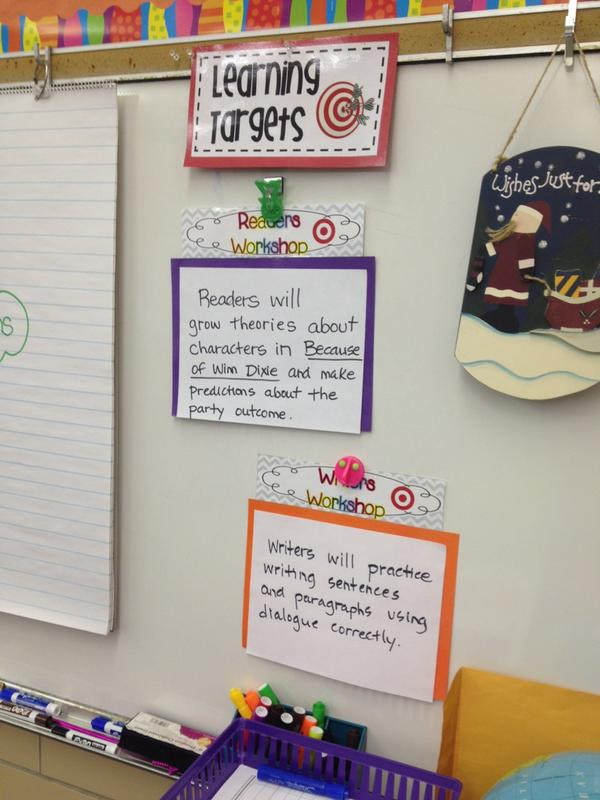
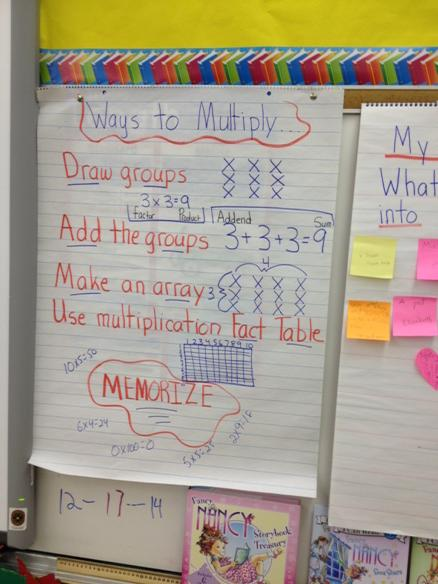
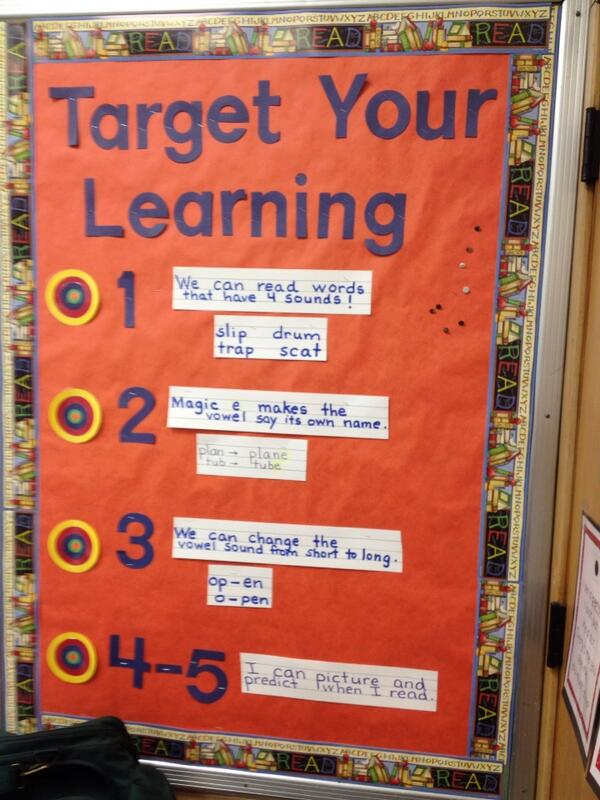
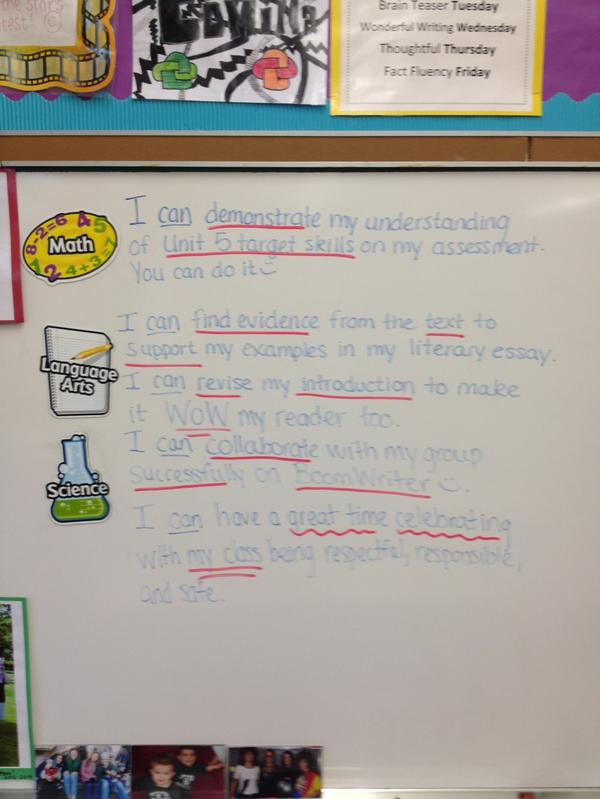
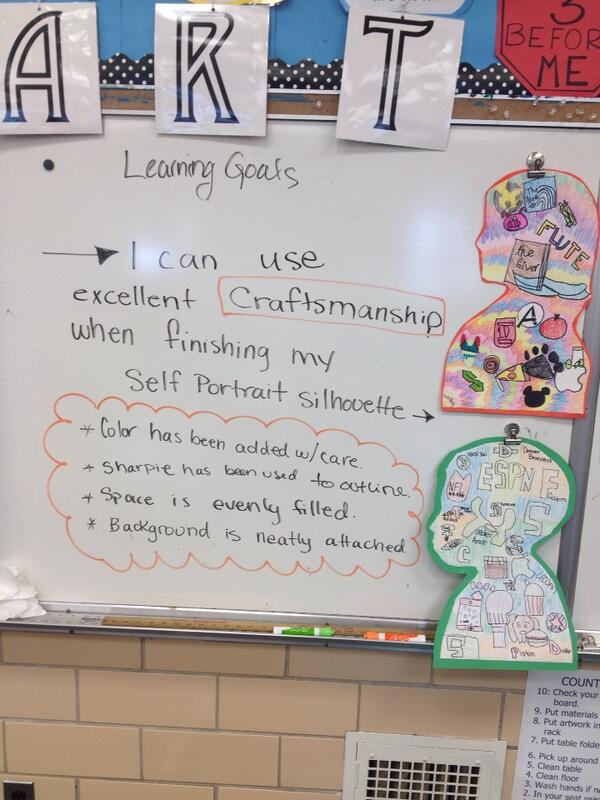
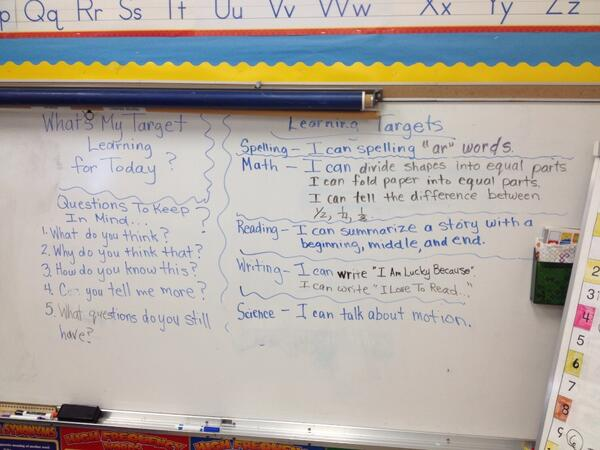
At our school, we make a concerted effort to post learning targets, making them the focal point of each lesson. The common language, “Target Learning” goals, within each grade level and for all subject areas is sustaining the development of skills. Setting instructional outcomes or target learning expectations is an extremely important step within the learning process. Student who understand the target learning, rather than merely meeting an assignment requirement, will more likely retain the information and have the ability to transfer that knowledge to future learning. Clearly stated learning targets that represents rigorous and important outcomes within each discipline is important to cementing skills.  Check out some examples:
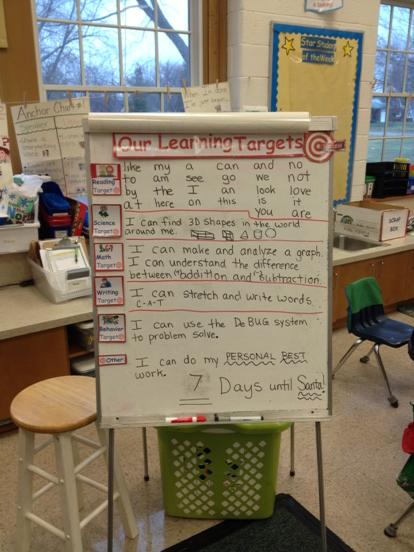


Posting learning targets provides a clear and narrow focus to the learning expectations. Intentional activities and formative assessments during the learning process, while utilizing quality questions/prompts, discussion techniques, and engagement strategies that culminates back to the learning target, is key to solidifying student outcomes.

Many of our teacher are taking learning targets to the next level by involving parents.  Some teachers will pose questions for parents to ask their children within student planners or through weekly newsletters.  Ask your child what their target learning was today:

  • What tricky spelling pattern is found in our long “I” words?  (studying “ight”)
  • What is the “heart” of your story?  
  • How many different ways can you write the number 20.
  • Describe the main character from today’s story.  Where does the story take place?  What do you think is going to happen in the next chapter?  
  • What was your hypothesis today during your science experiment?
  • Can you teach me three different ways to multiply?  
  • How do you utilize dialogue in writing?

Asking targeted questions related to instructional outcomes will focus on learning more than the activity, which will support retention of material, increasing the likelihood that students will transfer that knowledge to future learning.  

Some teachers are communicating target learning to parents through twitter posts:  


Parents who follow classrooms on twitter can view learning takeaways to gain knowledge of the school day, which will support intentional conversations about learning with their children.  No more will parents ask: What did you learn today?  They will now ask:  Can you add larger numbers by regrouping?  How did you use google docs to collaborate on a literary essay? Target questions will get to the core of Target Learning for the day.

I love when parents and teachers work together to combat an old-age question:  What did you learn today?

Enjoy teaching and learning in 2015!  

Friday, April 18, 2014

What is Active Participation? Diving into the depths of one's mental and physical learning!

In the early stages of being a principal, I attended a district workshop series hosted by SVSU focusing on effective teaching.  The presenter spent a lot of time focused on Active Participation.  We learned about the importance of classroom engagement through a teacher’s genuine passion for the subject, having intentional plans throughout their lessons to support active participation among all students during classroom discussions.  Many of the ideas seem simple and obvious; however, due to the pacing of curriculum, we sometimes forget to slow down and make sure students are getting a depth of knowledge that is necessary for cementing learning through active participation.

Charlotte Danielson suggests the following within Domain 3b of our teacher evaluation process:

·    Quality of questions/prompts:  Questions of high quality cause students to think and reflect, to deepen their understanding, and to test their ideas against those of their classmates. 
·    Discussion techniques:  Effective teachers promote learning through discussion… pose questions and invite all students’ views to be heard, enabling students to engage in discussion directly with one another, not always mediated by the teacher.
·    Student participation:  Teachers use a range of techniques to ensure that all students contribute to the discussion.  

These three concepts fit nicely with Active Participation, supporting all learners during classroom discussions and cognitively involving them throughout the learning process. 

So, what is Active Participation? 

Active participation is consistent and sustained covert and overt involvement of students being cognitively engaged within the learning process.  Active participation can be as simple as:

1.      Think
2.      Share with a friend
3.      Tell what you said or heard from your friend. 

It can also be more complex, diving into the depths of one’s mental and physical learning as highlighted below:  

Covert – Mental Learning  
  • Think about… put your thinking cap on…
  • Ponder this…
  • Examine…, consider this…
  • Imagine… etc.
  • Depth of Knowledge Wheel (DOK Wheel) – Many of our teachers keep this wheel posted in their classrooms to quickly initiate questions.  They utilize the DOK vocabulary to describe, explain, and interpret content during classroom discussions, enhancing the mental process of learning new material.
Overt – Physical Learning
  • Write
  • Oral response
  • Choral response
  • Signal – thumbs up, exit slip, etc.
  • Check out my previous post (Engagement Strategies to Empower Learning), which will provide some overt active participation strategies.  

During the covert and overt process it is necessary for teachers to consider wait time, which is needed to generate thinking.  There are three levels of answering questions:  fast, slow, and collaborative. 

When and why would you use these levels?

Level 1:  Fast answering can be used during mental math practice or basic recalling of information during subject review.
  
Level 2 – Intentional wait time:  Slow answering should be used during classroom discussions.  This is when teachers are providing three to five seconds of wait time to enhance the mental and physical learning during classroom discussions.  Three to five seconds of targeted wait time will cause focus and improve retention of material, generating higher level thinking and responses. 

Level 3 – Collaborative answering can be used during classroom discussion and/or guided practice.  Answering as a collaborative team allows for more volunteers, longer answers, increased inferences, increased responding, and builds confidence, allowing the teacher to become the facilitator of learning, enhancing empowerment and encouraging students to take charge of their learning.  

As teachers plan lessons, it is important to be intentional with strategies and techniques that support active participation during their lessons.  It is important to have targeted questions (Five Powerful Question via Rebecca Alber Edutopia Consulting Online Editor) to generate thinking and increase responses.  I encourage all educators to make a conscientious effort to increase wait time and be intentional about their active participation practices, making sure all students are actively engaged in learning!

Enjoy teaching and learning!  Have a great week!

Keith Howell
Be positive and passionate about the greatest job in the world… teaching children!!!!  

Resources:
Information adapted from Saginaw Valley State University Workshop Series:  Instructional Supervision

Webb, Norman L. and others. “Web Alignment Tool” 24 July 2005. Wisconsin Center of Educational Research. University of Wisconsin-Madison. 2 Feb. 2006. <http://www.wcer.wisc.edu/WAT/index.aspx>

5 powerful questions via Rebecca Alber Edutopia Consulting Online Editor