Pages

Monday, December 31, 2018

Self-reflection to kick off the New Year!

@rbishop_jr tasked the two of us with creating a blog post by January 2… it’s always good to have an accountability partner who supports you as a positive force to influence professional growth.  I find that blogging helps me organize thinking, cements learning, and holds me accountable for my professional growth. My hope is to get back to consistently (once a month) blogging in 2019, and I look forward to reading @rbishop_jr post in the near future.  So here is my post: Self-reflection to kick off the new year!

The conclusion of another calendar year is always a great time to celebrate successes while reflecting on how to improve our craft as we make resolutions for 2019.  We continually reflect on the effectiveness of our school culture and climate, instructional strategies, district initiatives, school improvement plans, curriculum and assessment, etc. Our PLCs collaborate by setting and monitoring goals that supports learning.  With that said, success of a building depends greatly on self-reflection as well as collaborative goals. If one truly want to sustain professional growth, then we need to think deeper than traditional performance reflection questions, while knowing that you are the only one who can truly answer self-reflection questions.   

Self-reflection question for 2019:  What does it take to be an Influencer? 


My colleagues and I have committed to meeting once a month to discuss what it takes to be an influencer within our organization.  Building leaders need to influence sustained professional growth to lead change. We decided to use Influencer: The New Science of Leading Change by Grenny, Patterson, Maxfield, McMillan and Switzler to guide our conversations.  The authors do an exceptional job identifying high-leverage behaviors that lead to profound change in an organization.  Influencer takes you on a journey of self-reflection by helping one find and clarify actionable vital behaviors to lead to positive results.  Too many of us focus on the results rather than the behaviors that lead to results. As a group we have spent time reflecting on the fact that successful influencers avoid spending time and effort on the wrong behaviors by drawing from vital behavior such as noticing the obvious, capitalizing on crucial moments, learning from positive deviants, and spotting culture busters:  
  • Notice the Obvious:  Looking for behaviors that are obvious but underutilized.  How do we capitalize on these behaviors and develop them into our actions?  
  • Look for Crucial Moments: Identify those times where everything is working against the results you want. Look for behaviors that can help you overcome those crucial moments. How do you prepare for potential barriers?
  • Learn from Positive Deviants: Look for people that do well in a challenging situation even when you or others are having problems within the same scenario. Identify what they are doing differently that could help you or others succeed. How do we identify when we need to learn from others and their experiences?
  • Spot Culture Busters:  Watch for crucial moments when shared vision and mission is necessary for success. How do we build our culture through shared leadership? Those that work against the shared vision and mission can destroy an initiative or organization.  How do we prepare for this and build capacity in others.
Understanding these four vital behaviors takes self-reflection.  Focusing on yourself and understanding the lens and behaviors you bring to the table will help in the quest to be a positive influencer.  How do you know if a behavior is vital to your influence? Like anything, if you are unsure, then track the behaviors and compare with your results.  If the behavior has a direct impact on the result then you know it is a vital behavior.

I look forward to self-reflection throughout the chapters of Influencer.  I already find myself considering the four vital behaviors, considering each when reflecting on past and future projects, curriculum reviews, and even interactions with staff and community stakeholders.  These four behaviors along with Six Sources that will be our focus within the next chapters will be my focus throughout 2019. I look forward to investigating our shared abilities while understanding motivation, defeat, and adjusting to change through the Six Sources:
  • What is your personal motivation?  Are you motivated?
  • How do you view your personal ability?  Are you able?
  • What does your social motivation look like?  Do others pay attention to your advice?
  • What is your social ability to enlist the support of others?  Can you enlist the help of others? 
  • What does structural motivation look like?  Is there an incentive conflict? 
  • How do you view the structural ability?  Do you have the tools to make it happen? 
These vital question, behaviors, and sources will continue to guide my focus as we maintain our commitment to leadership and balancing our influence to unlock the potential of our organization.  I will keep you posted as our reflection continues and Influencer guides our professional conversations.

As you reflect and set goals for 2019, start thinking about deeper self-reflection questions that will support your ability to Influence others.  Find balance and pick one or two vital behaviors that might resonate with you and be aware of how behaviors can change results. Continue to grow and embrace change, creating opportunities for professional growth, while enjoying the best job in the world… teaching children and growing capacity of others!

Tuesday, June 12, 2018

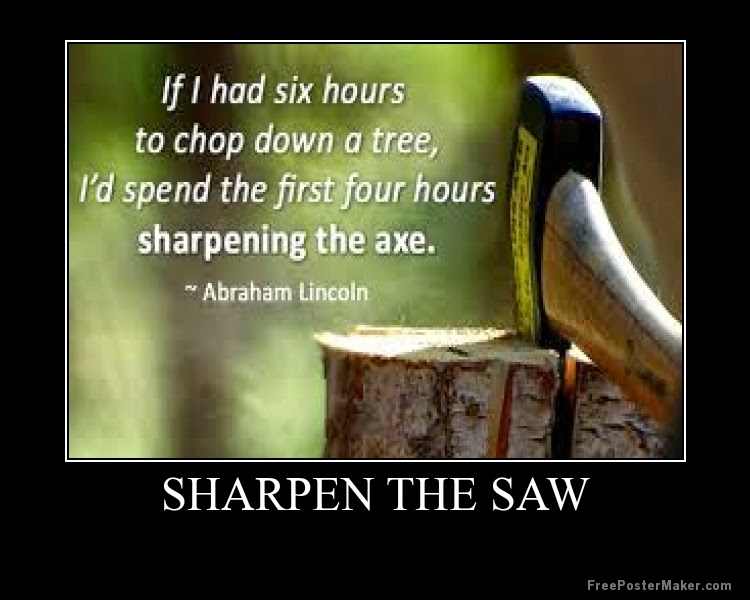
Sharpen The Saw

A few years ago a very wise principal suggested that I write a blog post about the importance of SHARPEN THE SAW, based on the work of Stephen Covey.  Great reminder as we relax, spend time with family and friends, gain knowledge, and replenish our energy levels to be amazing educators!  


Summer is a time when I have an increased focus on myself and family.  I attempt to increase (at the very least... maintain) my exercising habits, vacation with my wife and kids, connect with friends, read educational blogs, catch up on home improvement projects, relax and golf. Summer is a great time to reflect and become rejuvenated to start a new school year.


We all want to be highly effective people, but it is impossible to do that unless we are in the correct mindset.  As you take time to reflect over the summer and transition to another school year it is important to focus on YOU!  Creating a balanced-lifestyle is vital to supporting and enhancing your effectiveness as educators, parents, friends, spouse, etc.  Enjoy the summer and use Covey’s work as a guide to rejuvenation!  


“Sharpen the Saw means preserving and enhancing the greatest asset you have--you. It means having a balanced program for self-renewal in the four areas of your life: physical, social/emotional, mental, and spiritual. Here are some examples of activities:


Physical:
Beneficial eating, exercising, and resting
Social/Emotional:
Making social and meaningful connections with others
Mental:
Learning, reading, writing, and teaching
Spiritual:
Spending time in nature, expanding spiritual self through meditation, music, art, prayer, or service

As you renew yourself in each of the four areas, you create growth and change in your life. Sharpen the Saw keeps you fresh so you can continue to practice the other six habits. You increase your capacity to produce and handle the challenges around you. Without this renewal, the body becomes weak, the mind mechanical, the emotions raw, the spirit insensitive, and the person selfish. Not a pretty picture, is it?

Feeling good doesn't just happen. Living a life in balance means taking the necessary time to renew yourself. It's all up to you. You can renew yourself through relaxation. Or you can totally burn yourself out by overdoing everything. You can pamper yourself mentally and spiritually. Or you can go through life oblivious to your well-being. You can experience vibrant energy. Or you can procrastinate and miss out on the benefits of good health and exercise. You can revitalize yourself and face a new day in peace and harmony. Or you can wake up in the morning full of apathy because your get-up-and-go has got-up-and-gone. Just remember that every day provides a new opportunity for renewal--a new opportunity to recharge yourself instead of hitting the wall. All it takes is the desire, knowledge, and skill.”

Enjoy an amazing summer filled with experiences to SHARPEN THE SAW!
Keith Howell

Friday, May 18, 2018

Every Opportunity

Can you believe that it is already May 18! It is amazing how quickly a school year can come to a conclusion.

It will be June in no time at all! During these final weeks it is easy for us to forget what is truly important due to end of the year assessments, activities, paperwork, field trips, assemblies, fundraisers, etc… you get the idea! We are busy this time of year! With that said, we still need to finish strong and focus on the truly important aspects of learning: Building relationships that supports a culture of joy and learning!

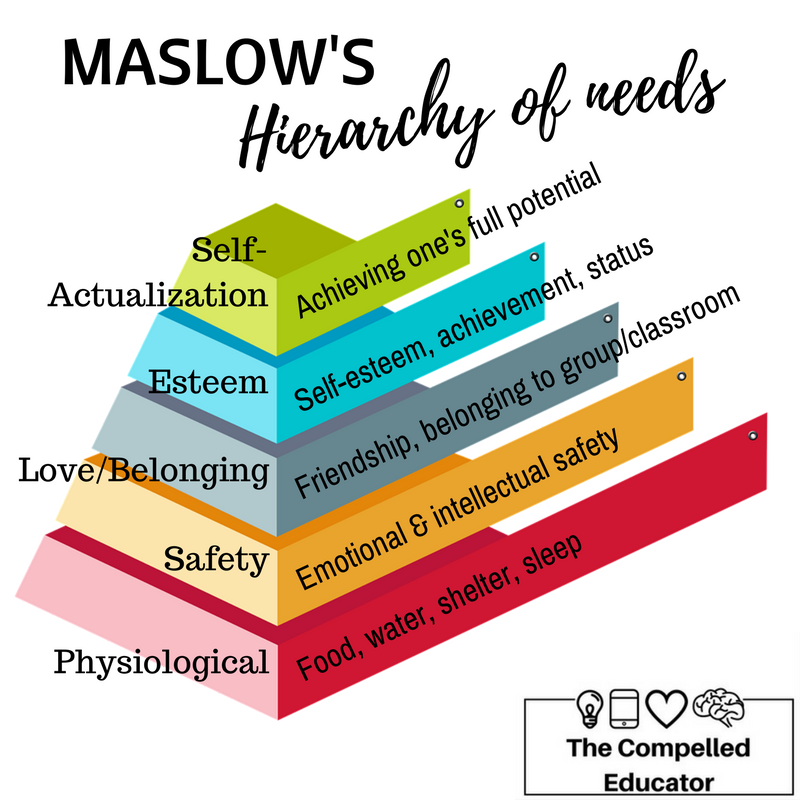
Last month I saw a great post from @Jennifer_Hogan, We must Maslow before we Bloom.  


@Jennifer_Hogan encourages educators to reflect on the relationships that we have developed during the school year and asks if there is anything more we can do as we enter the final stage of the school year. Within her post she included an Every Opportunity video that highlights the importance of being intentional with our interactions. Check it out!


I hope you find @Jennifer_Hogan’s post helpful. I encourage you to follow the #compelledtribe which is a group of educators who commit to educational blogging. #compelledtrib is a great place to sustaining learning, reflection, and collaboration. I would encourage anyone looking for inspiration to check out the #compelledtribe.

I appreciate everything you do each day to sustain a welcoming environment at our schools and in your classrooms! Teachers are great!!!!  Enjoy the final weeks of the school year!

Sunday, April 8, 2018

Intentional Planning - Relationships & Strategies

Welcome Back!!!  I hope everyone enjoyed a well deserved break with family and friends.  As educators return after a long break it is always good to review our intentional plans for sustaining a positive learning environment.  

“A quality teacher-student relationship means more than the combined power of all teaching and discipline techniques known to humankind.”
Love and logic Teacher-ism

I love this quote!  Establishing positive relationships with your students, while creating an atmosphere where children have positive relationships with each other, will truly benefit any classroom, family, or community.  Quality teacher-student and student-student relationships will support and increase a positive community where children want to thrive. It also makes everyone’s experience more enjoyable!  

As we move into the final months of the school year it is important to re-establish classroom expectations and learning missions that will empower students to be their best during warmer months.  

The best managed classrooms and positive learning environments do not happen by accident.  Talented educators are intentional in their planning.  Children, in general, will exhibit some type of minor or major behavior challenge during their childhood.  The key is to keep minor behaviors just that… minor.  As a teacher, administrator, and parent I have experienced a variety of behavior challenges that can be supported with simple Tier 1 redirection and distraction techniques.  Below are two posts that highlight the importance of intentional planning surrounding relationships and distraction, time, and Love and Logic techniques to support learning. Check them out if you are looking for additional strategies.

Before implementing behavior strategies it is important to solidify positive relationships.  Check out a few of my favorite relationship building techniques below:

Now that relationships are established, distractions techniques have a better chance of being successful.  Check out these techniques that will support learning.

I hope you find this helpful.  I appreciate everything you do each day to sustain a welcoming environment at our schools and in your classrooms!  Teachers are great!!!!

I will leave you with this Love and Logic Quote:

Rules provided without relationship result in rebellion.
Consequences given without relationship lead to resentment.
Rewards without relationship feel like bribes.
Love and Logic Teacher-isms

Enjoy teaching and learning!

Wednesday, November 29, 2017

Conferences 2017

When I was a principal, conferences were among my favorite times of the year!  Time after time, they reaffirmed an essential belief that I hold: our teachers are great!  As parents were leaving the building, many would stop by my office to give accolades about our teachers and praise the learning experiences their children were having throughout the year.  This provided terrific informal data that supported the positive relationships and learning environment we created together.  What a great feeling for our teachers and families!


Fall conferences might be the first time teachers are meeting parents, other than a friendly, "hello" during drop off or pick up, and the occasional family night.  Conferences are a time when teachers get 10-15 minutes (depending on the district) to showcase academic, social and emotional learning goals that students are setting and demonstrating progress toward throughout the school year.  Sometimes, parents don’t know what to expect … and neither do teachers!  It is extremely important that we are confident in our abilities to showcase the academic, social, and emotional progress and future goals that empower students to grow throughout the school year.  


The conference is an important event to make a great impression with parents and provide descriptive feedback of their student’s progress and goals.  Please help parents believe what we already know… there is no better teacher for their child!


Our teachers do a great job planning and providing parents with a terrific information and strategies of support; however, at times it is based on what we think parents need to hear rather than what they want to hear.  It is important to have a nice balance of both. So, what questions do you think parents really want answered when attending a conference?  These are the questions parents might not ask …but might just have on their mind.  Below are 10 questions to consider:


  1. Is my child safe (socially, emotionally, physically) at school? Do they have friends?
  2. Is my child’s teacher a happy person and is my child happy at school?
  3. Does my child’s teacher love kids?
  4. Does the teacher look for the uniqueness in my child?
  5. Is the teacher finding joy within the teaching profession?
  6. Is the teacher competent?  Is it evident that the teachers knows curriculum and how to impart knowledge?  
  7. Is my child learning … and more importantly, does my child love learning from this teacher?
  8. Is the teacher consistent?  Does the teacher do what they say?
  9. Does my child’s teacher clearly communicate expectations?
  10. Is homework purposeful?  Is homework targeted and differentiated practice, allowing for choice that empowers students to assume responsibility of their own learning?  


I am sure you can think of other questions that parents might consider.  Again, these are questions that may not be asked; however, parents will be thinking about them when sitting across the table from you during conferences. Or at least these were some of the questions my wife and I considered when at parent/teacher conferences.   

Most importantly, make sure parents leave your room with no question in their mind, you are the best teacher for their child!  It all comes down to positive relationships with teachers, parents, and ultimately students, that will enhance success during conferences and throughout the year.  Enjoy conferences, making it a great experience for everyone!

Monday, September 4, 2017

How do you foster a positive learning environment?

School starts Tuesday!!!!  As we look forward to meeting our students it is important to start the year strong, creating positive and long lasting relations with our students.  From my experience, students will have more success if they feel loved, important, and safe.  Below you will find 10 suggesting to get the year started:

1.     Morning Circle Time – Many of our teachers have morning meetings to start the school day.  Creating a morning meeting, allowing for students to learn about each other beyond school life, builds a classroom community of genuine respect and rapport.  Daily questions can focus on student backgrounds, culture, interests, events of the weekend, favorite foods/music/movies/games, special events, etc.  Becoming familiar with each other on a deeper level will support student self-awareness and acceptance of differences, which will decrease the likelihood of relationship issues during the school year.  Daily questions can focus on favorite experiences, field trips, project based learning activities, individual/class accomplishment or anything that was unique to your classroom.  

2.     Classroom Motto (start the year strong) – One teacher at our school starts the day by reciting the classroom motto.  He tells the students to push the button on their desk and all student proudly recites together, “feel good about yourself!”  Students truly feel good about themselves… not because they say it… because of the sustained teaching that goes along with saying it, creating a community of students who feel good about themselves.  His students feel good about: being a good classmate/friend, the effort they put into an assignment, learning new vocabulary words, solving problems on their own, being a good son/daughter/sibling, improving their writing skills, understanding their target learning, etc.  It works because it is a consistent approach implemented with empathy and support.  

3.     The Unlikely Student – It is “easy to connect” with students who demand your attention due to an outgoing personality, academic needs, or behavioral problems.  Something to consider, write one student’s name in your plan book each day (those who do not demand your time).  Make sure you are connecting with that child throughout the day by noticing their effort:  “Wow! Johnny did a great job on the writing assignment because he added exceptional detail”… and share those accolades with the class.  Notice things that go beyond school life: new shoes/shirt/haircut, asking about weekend, sporting event, video game, recess, family, etc.  It is important that you have a plan to connect, because if you don’t… the “easy to connect” students will demand that time and the “unlikely” student will not be noticed.

4.     Student Inventory – Look for the uniqueness of each child – Have students fill out a student inventory at the start of the year.  Revisit the student inventory that students provided you throughout the year.  Did anything change?  Student inventory example is below:

·         What do you like to do outside of school?
·         What is your favorite season?
·         List 2 of your favorite foods.
·         List 3 games you like to play.
·         What is your favorite animal, color, sport?
·         List your favorite type of music.
·         Do you like to read? What type of books do you like?
·         List 3 movies you like to watch.
·         Who do you like to play with/why?  Friend, parents, grandparents, sister, brother, other.
·         What is your favorite part of the school day?
·         What is your least favorite part of the school day?
·         What is your favorite special/subject?
Higher level inventory questions:
·         What are your dreams?
·         What do you want to be when you grow up?
·         Who would you consider to be your hero and why?
·         If you had unlimited money and could only use it to help people… who would you help and why?

It will be fun for you and your students to see how they have changed or stayed the same over the school year! 

5.     Positive Proximity – Greet your students each morning with a smile and a friendly hello.  Seems simple because it is!   It is also much better than asking “do you have your homework?”  Be present during independent work, supporting students and noticing their efforts throughout the day.  It is even ok to stop by the cafeteria (gym is where we eat lunch) or even shoot a basket or two during recess, positive proximity doesn't need to stop in the classroom.  The extra 2-3 minutes of positive proximity outside your classroom will enhance the community feeling that you are establishing in your classroom. 

6.     Active Listening  – When we are busy it is easy to send students on their way with a quick response, knowing that you would give a better response if you had the time... we do this as parents too!  Next time try saying this:  “Your question/need/etc. is really important to me and you deserve more time than I can give right now… can you hold on for a few minutes/after lunch/until tomorrow/etc. and I will give you the attention you deserve.”  If you say this with empathy, the child will usually feel validated and will (most likely) wait for your attention… sometimes it gives them time to problem solve on their own. Obviously, don't use this approach if there is an emergency or safety issues. 

7.     Tone of Voice  – Be aware of tone, volume and cadence when teaching and managing your classroom.  Use a softer delivery when managing behaviors and classroom procedures, planning and using nonverbal cues.   Use voice fluctuation, storytelling (instead of lecturing), and suspense during your classroom discussions.  Students will love it!  I have been in a lot of classroom where I did not want to leave because the tone was so engaging.  Your voice can set the relationship tone (positively or negatively) within a classroom.  Charlie Brown’s teachers were funny but I don’t think they were building any relationships with their tone of voice.

8.  “I noticed” notes - How it works:  Simply place post-it notes on student’s desk when they least expect it!

I noticed you finished your project today… nice work with great detail!
I noticed you are being a good friend to Johnny… you are kind!
I noticed you helping Sally with her math at lunch… you are a good friend!
I noticed you put great voice in your writing today… nice focus on our target learning!
I noticed you being a good listener… you rock!
I noticed you asking for help on your assignment… way to take charge of your learning!
I noticed you using "active listening" strategies with Sally during turn and talk… keep it up!

You get the idea!  I would not walk around the room giving “I noticed” notes all day… it could decrease the value.  Use it sparingly, maybe three to five per day and keep track, making sure you are noticing everyone over time.  This also works well with number three from above - The Unlikely Student.  I love this strategy because it provides encouragement and accolades to support a positive relationship between you and your students.  It will also teach students to self-regulate their behaviors, assuming responsibility to academic and social learning.  Students will love it and so will you! 

9.     Humor – It is ok to laugh, smile, and tell an appropriate joke from time to time.  Children want to see us having fun during the start of a school year!  A morning joke can go a long way to support positive feelings.  We have children telling Friday jokes on the morning announcements, it’s a lot of fun!

Q: What did the math book say to the other math book?
A: I have a lot of problems!

I love a good joke and so will your students!

10. Closure to the day and year – Facilitate a reflection discussion at the end of each day, showcasing the academic and social learning that took place.  Give accolades to individuals for positive effort and remember the happy and/or humorous moments during the day… maybe even tell your corny joke again.  Set goals for tomorrow and end the day by saying “be kind to one another,” supporting and modeling the positive feelings you are establishing within your classroom.  Make this a consistent conclusion to your day and they will be eager to return in the morning.

I truly believe that children will not learn from people they do not like or if they do not feel safe within their learning environment.  It is important to make connections that will last a school year.  @mathequalslove gets it!  Check out her post: 21 Ideas for the First Week of School.  She provides so many amazing ideas.  How do you foster a positive learning environment?  Share your ideas in the comments!  Let us continue to learn together throughout the year!  

Have great start to the school year!!!!

Keith


Tuesday, August 22, 2017

Welcome Back!!!!

Only a couple weeks away from students returning. It has been great to see and talk with so many colleagues who are ready to get the year started. As this new year begins, take time to reconnect and develop positive relationship with your colleagues, families, and students.  We truly believe that children will not learn from people they do not like or if they do not feel safe within their learning environment.  It is important to make connections that will last a school year.  We shared this inspirational TED Talk by Rita F. Pierson last year, and it is something we watch from time to time as a reminder of why we are educators:
  • Relationships - The Key to Learning
  • "Kids don't learn from people they don't like!"
  • "You say it long enough it starts to be a part of you."
  • "We teach anyway... because that is what we do! We are educators... We are    born to make a difference!"
  • "Every kid needs a champion!"
As this new year begins, we encourage you to sustain a relationship goal, which is maintained over time as a focal point to everything you and your students accomplish.  “You say it long enough it starts to be a part of you” and it will be a part of your culture as well.

“Be a champion” for your students and enjoy a wonderful start to the 2017-18 school year!

Monday, July 24, 2017

Summer Slide

Summer is a time to relax and enjoy some lazy days filled with swimming, family trips, backyard barbecues, and pool parties!  Unfortunately, summer can also be a time when learning decreases for many students and the proverbial 'summer slide' can take place. 

How can you tell if your child experiences a 'summer slide?'  In our district we provide NWEA assessment graphs with end of the year report cards, which plots scores on an “x” axis on the graph using time intervals between test events.  If there is a drop between the Spring score and the following Fall score, then your child may have fallen victim to the 'summer slide,' which is common for many students.   

Below you will find a variety of ideas to support your children in a fun and empowering manner.  Enjoy the many suggestions that may prevent the dreaded 'summer slide!'  Please include your ideas in the comments below.  Let's share ideas together!  Enjoy Summer Learning! 

Summer Reading 
Reading:

Family Reading – Family reading is one of the most important things we can do for early learners.  Take time to read to your children, which will build listening skills. Asking questions about stories your children are reading will increase comprehension and retelling skills.  Take turns reading aloud together; this will enhance oral language, phonemic awareness, phonics, vocabulary, fluency, background knowledge, comprehension, story organization, problem solving, listening comprehension, and writing skills…  wow!  Not only does family reading create bonding time, but it also helps cement great reading skills that will be used in school! 

As you know, reading is the “foundation of success” and is essential in all subjects.  Good readers activate background knowledge and are able to predict, infer, and question while reading.  Fluent readers can put themselves into the text, making self-to-text-connections.  When reading stories together, stop and ask questions, predict, put yourself into the story, and ask, "what would you do?"

Sample Questions:
-          Describe the main character.  Where does the story take place?  When does it take place?
-          Name the supporting characters.
-          What do you think the characters are feeling?  Why do they feel that way?
-          What is the problem in the story?  How does the character deal with the problem?
-          Could the character do something different to solve the problem?
-          What is your favorite part of the story?  Why?
-          Have you ever read a story that is similar to this story?
-          Does this story remind you of anything in your life?
-          If you could rename the story… what would it be?
-          How did the story end?  Would you change the ending?  How?
-          What is the most interesting part of the story?  Why?
-          Did you learn something new?  Give three new facts?  How can you use those facts in your life?
-          What are the main character's traits?  How is the character like you/different from you?
-          What do you think will happen next?
-          Tell an opinion you have about the story.  Tell a fact from the story.

Purpose for reading - Choose why you are reading… for information, enjoyment, etc. allowing time to make connections.

Making Connections - Text-to-self, text-to-text, and text-to-others – It is important to have conversations to enhance comprehension skills and understanding of the material being read.
Examples:
-          This story reminds me of when I went swimming because…
-          This story reminds me of when (character from different story/chapter/etc.) made a new friend  because…
-          This story reminds me when my teacher did ______ because…
-          This story reminds me of when we went on vacation because…
-          This character reminds me of my neighbor because…

I am sure you can think of additional questions or connection ideas.  Also, it is not necessary to use every question during your family reading.  Pick three to five questions that will support the particular story and one or two connections.  The goal and hope for family reading, besides great family bonding, is that it will support a natural transfer of skills to the child’s independent reading activities, enhancing comprehension and reading fluency.

Spelling and Vocabulary:

Spelling City - Practicing spelling was a challenging event in our household until we were introduced to Spelling City, which is a game-based program that provides spelling, vocabulary, and other language arts activities for K-12 cross-curricular word study.  The site offers a free or affordable premium membership that allows children to use their classroom generated spelling list within the program for motivational practice while providing immediate feedback to learners.   No longer do my children complain when being ask to practice spelling.  Give it a try; it might help your family as much as it has helped ours.

Driving vocabulary – Attach three to five vocabulary words on the back of the driver/passenger seat in your car.  While driving, have your child read, spell, and tell the meaning of each word, using them in a sentence.  Change the words every week or two but don’t tell your children when the words will change… anticipation will increase excitement for new vocabulary words. Have children keep a driving journal, keeping track of the new words they are learning.  Make sure the words are grade level appropriate and keep it fun.  You can also use this strategy to practice new spelling words.

Vocabulary practice/sentence building – Place words on index cards in two different piles – mix them up and see who can make a sentence.  Make a game out of this activity, creating a point system and the first one to 50 points wins! 

Label the house – Label some items in your house with index cards.  Environmental print supports immediate recall and enhances reading fluency.

Word of the week – Take a higher level vocabulary word and make it the 'word of the week' in your house.  Use it in sentences, post it in the house, spell it together, and encourage them to incorporate the word into their writing at school.  Try to make it fun!

Personal Word Bank – Create a personal or family word bank in a journal or notebook, generating vocabulary words for future writing activities.  You can even add your 'word of the week' to your journal, making your own personal thesaurus.

Writing:

Students need practice to support good writing – try to keep it fun!

Sports journal – While watching a game, keep a journal of favorite plays so that you can go back and try it on the field.  Summer baseball is heating up (Go Tigers!) and the NFL season is right around the corner (Go Lions!), which can provide many writing opportunities, listing exciting plays or favorite players. 

Family time capsule journal – Keep track of movies/family vacations/major news happenings/special sporting events/birthdays, etc. in a family journal.  You can add pictures and make it into a scrap book of memories and thoughts that can be remembered for years to come.

Writing for a purpose – Write a letter to a company that makes the best chocolate, game, toy, golf club, etc.  Maybe they will send you some free goodies as a thank you!  Write a letter if you are not impressed with a product.  I wonder if the CEO of the company will respond?

Popplet – Used as a mind-map, Popplet helps students think and learn visually.  Students can capture facts, thoughts, and images while learning to create relationships between them.  Check out my previous post – Popplet:Supporting son's writing homework - he loves to build!

Math:

When teaching 4th and 5th grade, I focused on the students’ ability to understand math concepts and think mathematically. Unfortunately, some of my students had a difficult time because they lacked the ability to recall basic facts. They understood the process; however, they scored low on assessments due to simple computation mistakes throughout the problem.  I always encouraged my students to practice math facts for five minutes a day when they were at home.  Five extra minutes of intense practice per day might not seem like much, but it adds up quickly. By the end of the summer, they will do over 400 minutes of extra basic facts practice!  For additional strategies, check out edutopia- 10 apps for math fluencyFree Apps:


Minecraft:

The creative and building aspect of Minecraft allows players to build constructions out of textured cubes in a 3D world.  Not only is it exciting to children (both of mine would play for hours if we let them), it provides them with collaboration and problem solving skills.  They are learning skills such as reading, math, inventorying, geometry, social skills, and the interactive environment supports children’s ability to understand cause and effect.  Children can even select various languages.  So, the next time your child wants to play Minecraft, you might just see it as a learning opportunity.

These are some of the additional learning opportunities I have used with my children, or have suggested to parents, to decrease the 'summer slide.'  Please remember the importance of keeping things fun and enjoyable while empowering children’s intrinsic motivation to be life-long learners.  Most importantly, don’t forget the need for family time, playing board games, enjoying a bike ride, putting together a puzzle and having rich conversations with your children, all activities which enhance family relationships.

Please include your ideas in the comments below.  Let's share ideas together! 

Enjoy learning throughout the summer! 

Friday, January 6, 2017

Happy New Year 2017

Happy New Year!!!  I hope everyone enjoyed a well deserved holiday break with family and friends. As educators return to school it is always good to review our intentional plans for sustaining a positive learning environment.  


“A quality teacher-student relationship means more than the combined power of all teaching and discipline techniques known to humankind.”
Love and logic Teacher-ism


I love this quote!  Establishing positive relationships with your students, while creating an atmosphere where children have positive relationships with each other, will truly benefit any classroom, family, or community.  Quality teacher-student and student-student relationships will support and increase a positive community where children want to thrive. It also makes everyone’s experience more enjoyable!  


As we start a new year it is always important to re-establish classroom expectations and learning missions that will empower students to be their best in 2017.  The best managed classrooms and learning environments do not happen by accident. Talented educators are intentional in their planning.  It starts with making connections and sustaining positive relationships.  Check out the #High5Challenge (focused on Reaching My Kids and Showing Them They Matter = PRICELESS) via @Mr_Oldfield  or Why Relationships Are the Foundation of Education via @bobby_dodd.  Both inspire and highlight the importance of keeping relationships at the forefront of everything we do as educators.


Continue to have a strategic plan focused on developing positive relationships with your students. Focus on things that are in your control: creating amazing classrooms where students are excited to learn!  Thank you for being great and enjoying the best job in the world… educating children!

Enjoy teaching and Happy New Year!

Sunday, December 18, 2016

Reflection 2017

The conclusion of another calendar year is always a great time to celebrate successes while reflecting on how to improve our craft as we make resolutions for 2017.  Educators continually reflect on the effectiveness of district and school improvement plans, culture and climate, instructional strategies, district initiatives, curriculum and assessment, etc. Our Professional Learning Committees do an amazing job of collaborating while setting and monitoring goals to support learning.  With that said, success of individuals, buildings, or districts depend greatly on self-reflection, asking questions that hit the core of our professional growth.    

Any job needs honest self-reflection.  Asking profound self-reflection questions, while understanding yourself and how stakeholders might view you, will truly improve your performance and maybe even the quality of your work experience. Examples of profound self-reflection questions:

  • Do my students like me?  Do I like my students?  Do I connect with them by creating authentic relationships?
  • Do my parents like me?  Do they know how much I care for their children and enjoy teaching? What would they say about my ability to communicate with them?
  • Do I surround myself with positive people?  Do I like my job?  Can I do better?
  • Do my colleagues like me?  Do they feel supported by me, or do I create anxiety for them?
  • Do I create a collaborative culture of safety and empowerment within the learning process, where students can be risk-takers?
  • Do I automatically go to a negative place when hearing about new initiatives or do I consider the positives aspects that might support my craft?  
  • Do I cast judgment rather than providing support and understanding?
  • Do I let disappointment in educational politics and uncertainties creep into the classroom?
  • Do I find the professional growth process (evaluation) as a nuisance or a chance to grow and develop my craft?
  • Am I defensive when receiving constructive criticism?  Do I make excuses, or use constructive criticism as a chance to grow professionally?
  • How do I respond to others that are negative?
  • Do I create my own stress?  Are my greatest strengths creating weakness?  Am I blinded by my own ambition?
  • If everyone at my place of work had my attitude, what kind of work environment would it be? 
  • Do I have a growth or fixed mindset? Do I self-create opportunities to grow professionally through attending professional development workshops, reading educational blogs and articles, collaborating through twitter chats, etc.
  • Am I the voice of “all good things” in education or the echo of what is wrong?

I feel extremely fortunate to work in a positive district, with amazing people; however, even the most positive educators should ask these questions from time to time.  These are questions that I utilize when reflecting, which sustains my focus of being the best that I can be for the district and ultimately our students.  If one truly want to sustain professional growth, then one must think deeper than traditional performance-reflection questions.  Genuine self-reflection will get to to core and drive professional growth.

As you reflect and set goals for 2017, start thinking about deeper self-reflection questions that will support your motivation and positively carry you into a new calendar year.  Pick one or two that might resonate with you and try to improve by giving the “extra degree.” Always remember the importance of being the “positive voice” in education!  Continue to grow and embrace change, creating opportunities for professional growth, while enjoying the best job in the world… teaching children!

Thanks for reading and make this holiday season a time for family, friends, and reflection.

Enjoy the conclusion to another great year!